
How to Evaluate a Franchise Opportunity: A Step-by-Step Guide
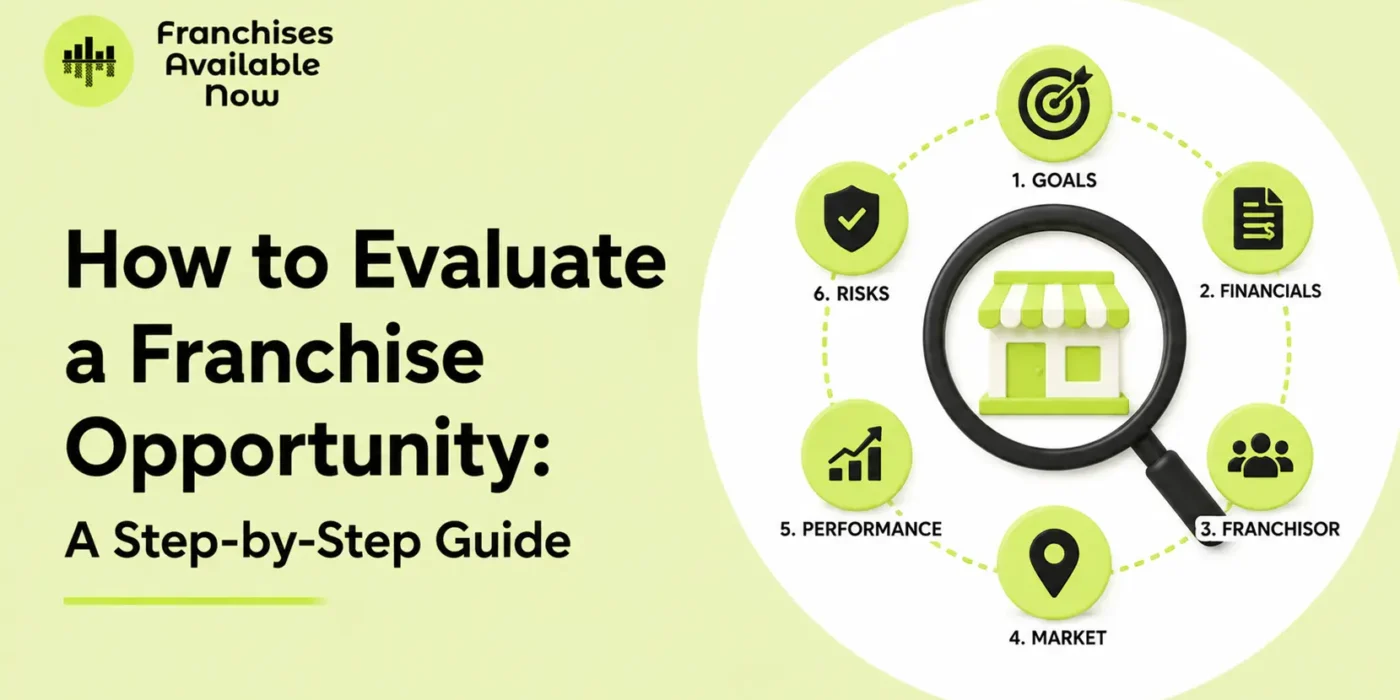
One of the most common mistakes prospective franchise buyers make is falling in love with a brand before they’ve done any real evaluation.
They get excited about a product. They hear a success story from a friend. They like the logo. Then they ask: “Is this a good franchise?”
That’s the wrong question. The right question is: “Is this the right franchise for me?”
A franchise that’s a perfect fit for one person can be completely wrong for another. Evaluating a franchise opportunity properly requires a structured process not a gut reaction to a brand that feels familiar.
Here’s how to do it right.
Start With Yourself, Not the Brand
Most people begin by researching franchise companies. The better starting point is researching yourself.
Before evaluating any specific opportunity, get clear on:
- What are my financial goals income replacement, wealth building, supplemental earnings?
- What lifestyle do I want full-time involvement, semi-absentee, flexible hours?
- Do I want to manage a team, or work primarily solo?
- What skills and strengths am I bringing to a business?
- What does success look like for me in three to five years?
Without clear answers to these questions, it’s nearly impossible to know whether a franchise is genuinely a good fit or just exciting on the surface. These are also the inputs that drive a useful discovery session with the AI Franchise Advisor, which can help match your profile to franchise categories worth exploring.
Understand How the Business Actually Works
Not all franchises operate the same way. Some require the owner on-site every day. Others are built for executive ownership through delegation. Some generate recurring revenue from long-term contracts. Others rely on constant new customer acquisition.
As you evaluate each opportunity, understand:
- How the business generates revenue and who pays for it
- What the owner’s day-to-day role actually looks like
- How many employees are involved and what they do
- What drives customer retention versus one-time transactions
- What makes the difference between a thriving location and a struggling one
You should be genuinely interested in the business itself not just the concept of owning a business. Enthusiasm for the model matters, because you’ll be living inside it every day.
Evaluate the Full Investment — Not Just the Franchise Fee
Many buyers fixate on the franchise fee as the headline number. In reality, it’s only one component of the total investment.
Before committing, make sure you understand:
- Initial franchise fee
- Equipment, build-out, and setup costs
- Inventory and pre-opening expenses
- Working capital for the startup period
- Ongoing royalty and marketing fees
- Technology and software fees
- Renewal costs at the end of the term
The right franchise investment isn’t the cheapest option or the most expensive one. It’s the one that aligns with your financial situation and risk tolerance and that gives you a realistic path to profitability given your market and capabilities.
If you’re still working out how to structure your funding, the franchise investment calculator and funding guide can help you model different scenarios before you commit to anything.
Read the Franchise Disclosure Document Carefully
The Franchise Disclosure Document the FDD is the most important document in your evaluation process and one of the most underused.
The FDD provides detailed information on:
- The franchisor’s background and leadership team
- Litigation and bankruptcy history
- All fees and financial obligations
- Territory rights and exclusivity
- Franchisee obligations and restrictions
- Franchisee turnover rates
- Financial performance data (when provided)
The FDD can feel overwhelming at first. Read it anyway. Pay particular attention to franchisee turnover — a high rate of closures or terminations is a significant warning sign. Financial performance representations, when included, can help you build realistic projections for your own planning.
Every serious franchise buyer should review the FDD thoroughly, ideally with a franchise attorney.
Talk Directly to Existing Franchise Owners
If there is one step in the evaluation process you should never skip, it’s franchisee validation.
No marketing material, no franchisor presentation, and no financial disclosure tells the story as clearly as a conversation with someone already operating the business. Ask current franchisees:
- Why did you choose this franchise over other options?
- What surprised you most after you opened?
- How responsive and supportive is the franchisor when problems arise?
- What does a realistic week look like hours, demands, challenges?
- Are you hitting the financial targets you expected?
- Knowing what you know now, would you make the same decision?
These conversations are often where the real picture emerges both the strengths of the system and the challenges that don’t show up in brochures.
Evaluate the Franchisor as a Long-Term Partner
When you buy a franchise, you’re not just buying a business model. You’re entering a long-term relationship with a franchisor one that will shape your experience as an owner for years.
Ask yourself honestly:
- Does the leadership team seem transparent and trustworthy?
- Do they answer hard questions directly or deflect?
- Are they genuinely invested in franchisee success, or primarily focused on selling new units?
- What does the support structure actually look like in practice?
The strength of the franchisor relationship matters enormously. A weak or disengaged franchisor can undermine even a strong business model. A great franchisor accelerates your learning curve and helps you avoid mistakes that would otherwise cost you time and money.
Support structures vary widely across franchise systems. Ask specifically about initial training, ongoing coaching, field support visits, marketing assistance, technology platforms, and franchisee peer networks. What’s available on paper and what franchisees actually experience aren’t always the same thing.
Look at Market Fit, Not Just Brand Strength
Even the best franchise system needs a customer base to serve. As part of your evaluation, understand the market you’d be entering:
- Who is the target customer and how large is that population in your area?
- Why do customers choose this service over alternatives?
- What does the competitive landscape look like locally?
- Is the industry growing, stable, or declining?
- Does the territory available to you give you a realistic customer opportunity?
You don’t need to become an industry analyst. You do need to understand why the business creates value and whether sufficient demand exists in your specific market.
This is particularly important for franchises in categories like senior care, home services, or wellness where local demographics drive results. Concepts like Home Helpers Home Care or Stretch Zone serve very specific customer profiles, and understanding whether your local market fits that profile is part of a thorough evaluation.
Don’t Rush — The Right Franchise Is Worth Finding
Buying a franchise is one of the most significant financial and lifestyle decisions most people will ever make. Take the time the decision deserves.
Evaluate multiple opportunities. Ask uncomfortable questions. Review every document. Talk to as many existing franchisees as you can reach. Compare not just the business models but how each opportunity fits your goals, schedule, strengths, and long-term vision.
The goal isn’t to find a franchise quickly. It’s to find the right one. That distinction is what separates franchise owners who build something they’re proud of from those who spend years in a business that was never a real fit.
You can browse all available franchises to start comparing categories and investment levels side by side a useful first step before narrowing your focus.
Frequently Asked Questions
What is the most important step in evaluating a franchise opportunity?
Speaking directly with existing franchisees. No disclosure document or franchisor presentation gives you as accurate a picture as a candid conversation with someone already operating the business.
What is the FDD and why does it matter?
The Franchise Disclosure Document is a legally required document that franchisors must provide to prospective buyers. It covers everything from fees and obligations to franchisee turnover and financial performance data and it’s essential reading before any investment decision
How many franchises should I evaluate before deciding?
Most franchise advisors recommend evaluating at least three to five opportunities across different categories before narrowing your focus. Comparing options helps you understand what trade-offs you’re actually making.
What red flags should I watch for when evaluating a franchise?
High franchisee turnover rates, evasive answers to direct questions, inconsistency between what the franchisor claims and what franchisees report, and aggressive pressure to sign quickly are all significant warning signs.
How do I know if a franchise territory is right for me?
Research the local customer base, competition, and demographics for the business you’re considering. Ask the franchisor for data on comparable markets and speak with franchisees in similar territories about their experience.